13 March 2026 | Pressemitteilung
LanguageDEDownloads
-
Quartely report 4.2025
PDF | 66 kB | Version as of: 13 March 2026
The situation in the German chemical and pharmaceutical industry remained tense in the last quarter of 2025.
- Production: Pharmaceuticals grow, chemicals continue to decline
- Producer prices stagnate, cost burden remains very high
- Decline in sales for the industry – both domestically and abroad
- Outlook: Iran war makes forecasts impossible
The situation in the German chemical and pharmaceutical industry remained tense in the last quarter of 2025. Despite a slight recovery among some industrial customers at the end of the year – triggered by a few large orders – the downturn in the chemical industry continued: production, prices, and sales declined once again. Capacity utilization remained below the profitability threshold. The pharmaceutical industry, on the other hand, posted positive results, stabilizing the overall picture with its growth. However, concerns are also growing in the pharmaceutical sector. One thing is certain: the industry as a whole is suffering from weak industrial demand, high import pressure, and intense price competition. The Iran war also creates further risks due to a potential blockade of the Strait of Hormuz. These extend beyond oil and gas supplies. There are growing concerns about serious and increasing shortages of raw materials – for example ammonia and phosphate, helium and sulfur. There are also initial indications of disruptions in international supply chains.
No turnaround in sight
There is no sign of a rapid improvement in the economic situation in the German chemical industry. The relief measures introduced by the federal government have not yet reached the industry and do not compensate for structural disadvantages.
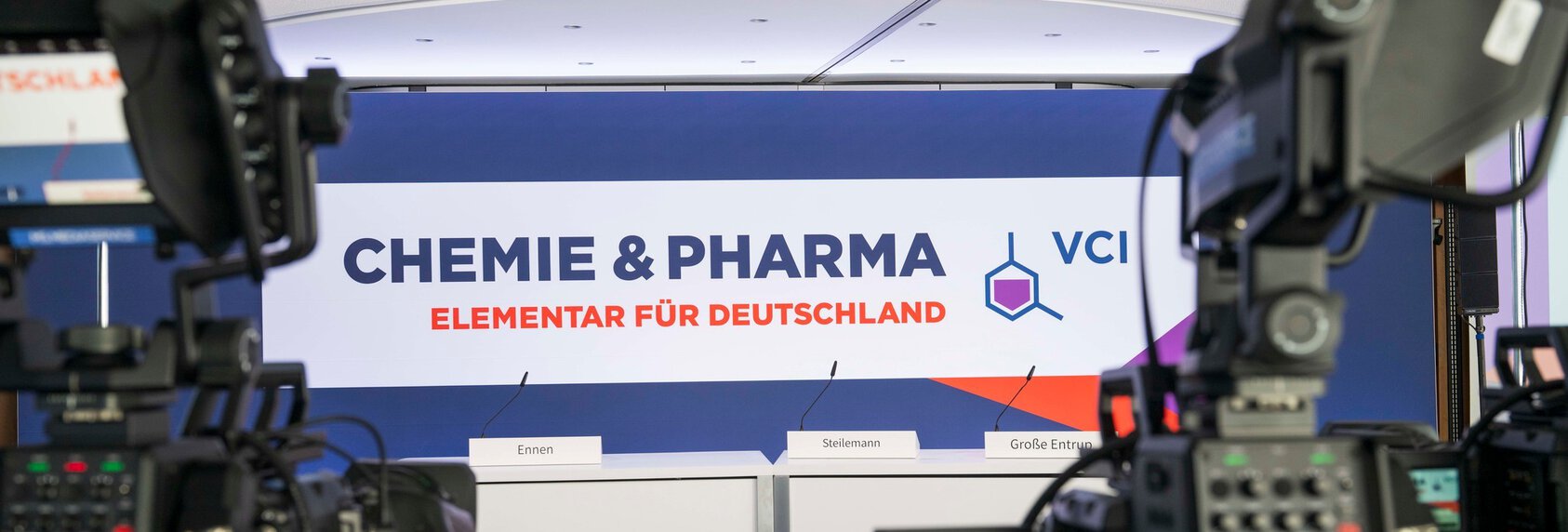
VCI director-general Wolfgang Große Entrup comments: "The chemical industry's annual results are abysmal – production, sales, and prices are all in the red. Pharmaceuticals are a ray of hope with solid growth. We had hoped for much more after the change of government. Frustration among companies is high about the slow pace of economic policy reform. 2026 will be no easier. Even before the Iran war, there was no sense of optimism. The longer the war lasts, the more severe the consequences become. High prices and ongoing uncertainty are pushing many companies to their limits. Strategic planning is becoming increasingly difficult. Instead, companies are operating on a short-term basis. The world order is being redefined. Europe is struggling to find its bearings. Germany is reforming at a snail's pace. Without a genuine willingness to reform and a powerful impetus in Berlin and Brussels, there is a threat of a structural break for the industrial base."
The figures at a glance:
- Forecast: The Iran war is causing great uncertainty. As a result, it is currently impossible to reliably predict how the chemical and pharmaceutical industries will develop in 2026.
- Production rose by 0.9 percent in the last quarter of 2025 thanks to strong growth in the pharmaceutical industry. This was 1.9 percent above the previous year's level. In the chemical industry, however, production was once again significantly reduced (–2.9 percent below the previous year’s level). It therefore remains at a very low level. Capacity utilization at chemical plants averaged 72.5 percent in 2025. Over the year as a whole, production in the industry declined by 0.5 percent (chemicals –3.3 percent, pharmaceuticals +4.5 percent).
- Costs and prices: In the fourth quarter of 2025, there was little movement in producer prices in the industry. Compared to the previous twelve months, they were down 0.6 percent. Prices for chemicals continued to decline, mainly due to increasing import pressure. At the same time, costs remained high compared with competitors.
- Total sales in the industry fell by 0.6 percent in the fourth quarter of 2025 compared with the previous quarter. At €51.8 billion, they were 2.8 percent below the level of twelve months ago. Seasonally adjusted domestic revenues fell to €18.9 billion (–2.3 percent). Foreign sales recovered slightly compared to the previous quarter to €32.9 billion. However, this was still 2.7 percent below the previous year's figure – an indication of weak price competitiveness. For the year as a whole, the chemical and pharmaceutical industries together achieved sales of €220 billion – a decline of 1.4 percent (chemicals –3.8 percent, pharmaceuticals +5.5 percent). Total sales of €83 billion were achieved domestically and €136 billion abroad.
The VCI is Europe's largest association for the chemical and pharmaceutical industries. With its 22 specialist associations and seven regional associations, it represents the interests of around 2,000 companies – from global players to highly specialized medium-sized businesses. With sales of €240 billion in 2024 and more than 560,000 employees in Germany, the industry is one of the strongest drivers of innovation, prosperity, and the future. The VCI is active in Germany, Europe, and worldwide to ensure a strong chemical and pharmaceutical industry today and tomorrow. Contact: VCI Press Office, phone: +49 69 2556-1496, email:
presse@vci.de
Contact
For questions or suggestions, please feel free to contact us.

Arne Hübner
Pressesprecher Chemikalienpolitik, Handelspolitik und Wirtschaft
- Phone: +49 69 2556-1489
- E-mail: arne.huebner@vci.de